STOP THAT NOISE!

Extract from SHEQ Management Magazine Online - Edition:
Wednesday, 15 February 2012 20:15

The annoyance of noise has no doubt plagued man since the beginning of time. Can you imagine a caveman grunting at a something-or-other-saurus for disturbing his sleep? JACO DE KLERK discovers annoyance is the least of man’s noisy problems

It’s Sunday morning and you get to sleep in. Blissful. You may slip in and out of consciousness, images of kittens, unicorns, rainbows and fairies filling your early morning dreams. If life was a musical, this is where you’d break into song: … The hills are alive with the sound of … - weed-eaters? Seriously? You’re catapulted back to reality. You leap out of bed, knock over a lamp and trip over the dog before realisssssing that your neighbour is tending his garden.
Noise. Can’t live with it, can’t live without it; rules and regulations have been the order of the day for centuries.
In ancient Rome, the noise made by iron-wheeled wagons as they pummelled the cobblestones was regulated to ensure that sleeping Romans were not disturbed. Several Medieval European cities, meanwhile, prohibited night-time carriages and horseback riding to make sure residents got a peaceful night’s sleep. Such noise problems seem insignificant compared to those of modern society – trucks, aircraft, trains, power tools, heavy machinery, weed-eaters and hair dryers – that interrupt our leisure time and relaxation. But that’s the least of our problems. It’s been proved that ongoing high noise levels could damage the hearing of an entire workforce.
Dangers of noise
Noise-induced hearing loss (NIHL) is the impairment of someone’s hearing, usually resulting from exposure to excessive occupational noise and generally over an extended period of time – some months or years. Such hazardous noises can damage hair cells situated in the inner ear that convert sound energy into electrical signals that travel to the brain. Once damaged, these small sensory cells can’t grow back. NIHL can also be caused by acoustic trauma – for example, a single exposure to an intense sound, such as an explosion.
Sound is measured in decibels (dB), with an increase of 10 on the decibel scale meaning a sound is 10 times more powerful and sounds twice as loud to your ears. That puts things into perspective if you consider the humming of a refrigerator is 45 dB, normal conversation approximately 60 dB and dense city traffic up to 85 dB – which could cause hearing loss with continuous exposure. As a rule of thumb, if you experience any difficulty hearing a normal conversation two metres away from the speaker, the surrounding noise levels are probably above 80 dB.
Noise doesn’t only have a physiological effect on a workforce but can also have a psychological one, such as stress, reduced processing capacity and post-work irritability – which makes it extremely difficult for employees to relax and unwind. That will, in turn, affect the duration a worker spends on a specific task; by placing greater demands on a worker’s attention, which can affect concentration, noise can effectively increase the cost of doing a job. High noise levels can also interfere with communication in the workplace, leading to an increased risk of accidents, since it will be more difficult to hear approaching dangers and warnings.
Protecting the workforce
Impala Platinum developed a hearing conservation programme to protect its employees and contractors against this danger. The programme ensures noise is reduced – anywhere underground or on the surface – where levels exceed 85 dB and has been created in accordance with the Mine Health and Safety Act, 29 of 1996, and the Minerals Act (Act 50 of 1991, Chapter 34). These Acts makes mines’ conservation programmes legally binding, and a punishable offence if not complied with, guaranteeing the protection of the workforce against hazardous instructions – such as being told that to work while there’s excessive noise nearby. Impala acknowledges that its hearing conservation programme is only an outline of the minimum requirements for the safety of its workers, and implements further safety measures as needed.
The mine has also employed mandatory routine audiometric examinations (tests that measure the sharpness and acuity of an employee’s hearing over time) for all employees who are – or may be – exposed to dangerous levels of noise. These tests are carried out on all pre-employed staff to establish a baseline level, and again when an employee leaves. The tests are also conducted on workers who have experienced an acoustic trauma. To facilitate this process – protecting the workforce and the mine – Impala requires each employee to furnish an exit medical examination certificate before they receive their final payment.
Impala manages excessive sound by buying less noisy equipment, or muffling and silencing machinery that doesn’t have a quieter alternative. Instances where such measures are employed include:
• Boiler exhausts, where high pressure steam is vented through a large pipe several times a day, producing low-frequency noise at high levels. This problem was dealt with by fitting a perforated cone diffuser to existing ventilation pipes – splitting the single exhausts jets into many smaller ones, which lowers the velocity and reduces the noise. This apparatus also transforms the noise frequency from low to high – making it easier to muffle. An absorbent attenuator is added to further reduce the noise emissions – achieving an overall noise reduction of up to 40 dB without any loss of performance.
• Compressed air cleaning guns generate violent air turbulence and produce unacceptable noise levels at the outlet. Impala addressed this problem by replacing the single-jet nozzles with compound ones, producing a ring-shaped air stream at lower speeds around the main high-speed one. This smoothes the transition of the high-speed stream into the surrounding still air, reducing the noise by 20 dB.
• High-velocity exhaust air emitted from the handle of a hand-held pneumatic grinder causes turbulence and noise in the surrounding air. The mine solved the problem by stuffing the handle with steel wool to distribute the exhaust air and reduce the velocity, resulting in a noise reduction between of 15 and 20 dB.
• Sharp bends, closely spaced control valves and internal build up of scale (a hard greyish-white substance sometimes found inside water pipes and water heating containers) creates turbulence in pipes and ducts, which hinders the flow of the material being conveyed and generates noise. Impala installed smoother bends to reduce turbulence and increased the distance between control valves to stabilise the material before it reached the next valve, decreasing noise levels and improving the performance of pumps.
To further reduce incidents of NIHL, Impala implemented a noise-related training programme for all its employees. When new staff, contractors or personnel returning from leave arrive on the mine, they have to report to the training centre for training or refresher courses, which cover all relevant aspects of hearing conservation. Impala is also taking measures to prevent employees who have NIHL from being further exposed to damaging noise levels by transferring them to other tasks or to areas where there’s less noise.
Harmony, AngloGold-Ashanti and the Aquarius Group have implemented noise management strategies similar to Impala’s. The aim is to limit dangerous noise levels by installing machinery that emits lower levels of noise or by using silencing equipment if quieter machinery isn’t available. Those mines are furthermore complying with the requirements of the Mine Health and Safety Council through their commitment to industry targets – ensuring employees’ hearing ability doesn’t deteriorate by more than 10 percent due to occupational NIHL – and by installing equipment that doesn’t exceed sound levels of 110 dB in the workplace. Harmony, Ashanti and Aquarius are also conducting audiograms of all occupationally noise-exposed employees when they join the company and annually thereafter.
The mines use hearing protection products to further guard their workforce. Companies may use basic earplugs in areas where noise levels aren’t too excessive for employees’ safety. Low foam earplugs can be used if staff have to wear such equipment for long periods, as they place less pressure on the ear canal. When noise levels climb above the 85 dB mark, mines rely on earmuffs for noise protection. Earmuffs can drown out loud noises, but should be cautiously selected, as over-protection can occur. Where too much sound is blocked out, workers won’t be attuned to their environment and possible approaching dangers. Mines can deal with that by purchasing earmuffs that block out loud noises – above 85 dB – but allow softer sound – below 75 dB – to be heard, thus enabling employees to hear warnings and speak to one another.
Keeping more than just the ears covered
NIHL is one of the most common health risks the mining industry is beset with and is covered by Rand Mutual Assurance (RMA), as it’s a scheduled compensable disease in terms of Schedule 3 of the Compensation of Occupational Injuries and Diseases Act. This form of hearing loss is responsible for roughly 15 percent of all the claims submitted to RMA and accounts for approximately 45 percent of the costs paid out by the company to claimants.
RMA also covers deafness due to trauma – for example, a head injury – and acoustic trauma. However, an employee’s right to benefits lapse if not brought to the attention of the employer, Compensation Commissioner or the RMA within 12 months of onset of the problem. The date the ailment starts is the date of the first audiogram that shows a hearing loss of 10 percent or more than the initial audiogram the employee took. HIV, Aids and Highly Active Anti-retroviral Therapy may also cause hearing damage, which can’t easily be distinguished from NIHL. This and other non-work related hearing loss, such as ageing, may hamper employees’ compensation – and the fight against NIHL itself.
So the next Sunday morning when you have the blissful chance to sleep in and your mind fills with everything sparkly and wonderful and the hills start to roar with the sound of weed-eaters… put in some earplugs or have a long talk with your neighbour. Annoyance is perhaps the mildest of mankind’s noise-related problems.

BRAIN TEASER


What do these seven words have in common?1. Banana
2. Dresser
3. Grammar
4. Potato
5. Revive
6. Uneven
7. Assess

Look at each word carefully.


 Answer:

In all of  the words listed, if you take the first letter, place it at  the end of the word, and then spell the word backwards, it will be the same word.


JOKE OF THE WEEK


OFFICE SAFETY- FALLS

Falls are the most common office accident, accounting for the greatest number of disabling injuries.  The disabling injury rate of falls among office workers is 2 times higher than the rate of non-office employees.  Once of the most common causes of office falls are tripping over electrical cords or wires are other common hazards.
Office falls are frequently caused by using a chair or stack of boxes in place of a ladder, and by slipping on wet floors.  Loose carpeting, objects stored in hall walkways, and inadequate lighting are other hazards that invite accidental falls.

 
Fortunately all of these fall hazards are preventable.  The following checklist can help stop a fall before it happens:
  • Be sure the pathway is clear before you walk
  • Close drawers completely after every use.
  • Avoid excessive bending, twisting and leaning backward while seated
  • Secure electrical cords and wires away from walkways
  • Always use a stepladder for overhead reaching. Chairs should NEVER be used as ladders.
  • Clean up after any spills immediately
  • Pick up objects co-workers may have left on the floor,
  • Report loose carpeting or damaged flooring to the SHE Department.
  • Never carry anything that obscures your vision
  • Wear stable shoes with non-slip soles
  • Hold on to railings when walking down stairs or ramps

KEEP SAVE AND DON’T FALL VICTIM TO THESE HAZARDS

SAFETY STARTS WITH YOU!


NB!!! WATER

Drinking a healthy amount of water is vital to your health. You can never imagine just by drinking a healthy amount of water, you gain tremendous health benefits, and sometimes you can even throw away your migraine medicine or pain killer.

Before you can appreciate the benefits of water to your health, let’s review the role of water in human body.

FUNCTION OF WATER IN THE BODY

The human body is anywhere from 55% to 78% water depending on body size. A rule of thumb, 2/3 of body is consists of water, and it is the main component of human body. Did you know that your tissues and organs are mainly made up of water? Here is the %:

  • Muscle consists of 75% water
  • Brain consists of 90% of water
  • Bone consists of 22% of water
  • Blood consists of 83% water

The functions of water in human body are vital. The water:

  • Transports nutrients and oxygen into cells
  • Moisturizes the air in lungs
  • Helps with metabolism
  • Protects our vital organ
  • Helps our organs to absorb nutrients better
  • Regulates body temperature
  • Detoxifies
  • Protects and moisturizes our joints

Every cell in your body needs water from head to toe. That is why it is so important to drink enough fluid. Take for example, brain consists of 90% of water, if you do not supply enough water to your body, your brain cannot function well, and you will get headache or migraine. Hence, next time, if you feel fatigue and headache, it may be the sign of dehydration.

The Harmful Effects Result from Dehydration:

  • Tiredness
  • Migraine
  • Constipation
  • Muscle cramps
  • Irregular blood pressure
  • Kidney problems
  • Dry skin
  • 20% dehydrated – Risk of death

Symptoms of Dehydration

Here are some of the symptoms that you need more water:

Dark Urine – Dark Yellow or Orange in Color: Urine is generally pale yellow to clear when you have sufficient water intake. Dark color or strong smell indicates that you need to drink more water.

Dry Skin: Skin is the largest body organ and requires its share of water.

Thirst: Thirst is the most obvious sign that you're already dehydrated. It is always a good practice to drink more water when your are not thirsty, don’t wait until you're thirsty.

Hunger: Most people mistake hunger for the indication to eat more, whereas in actual fact, they may be dehydrated. So before you have your meal, grab a glass of water.

Fatigue: Water is a source of energy and gives you a boost in energy.

13-04-2012 TOOLBOX TALK

 http://www.peooutpost.blogspot.com/2011/04/near-misses-what-can-we-learn.html

NEAR MISS 
We’ve all heard or used the phrase close call or “near miss” in one way or another. Have you ever really stopped and asked “What is a near miss”? Wikipedia defines it as, “an unplanned event that did not result in injury, illness, or damage but had the potential to do so.” What does this mean to you? A Near-Miss is an opportunity to improve safety, health, environmental and security of an operation based on a condition or an incident with potential for more serious consequence.

Now, ask yourself - How many times have you shrugged off a near miss?

Did you ever give it a second thought? The difference between a near miss and an accident often is a fraction of a second or a few millimeters. And when it happens again, the outcome might NOT be the same.

In 1969, a study of accidents was undertaken by Frank E. Bird, Jr. who used the “Heinrich Safety Pyramid” as the basis of his study, found results that were even more astounding. After analyzing 1,753,498 accidents reported by 297 cooperating companies, Bird determined that the number of near misses is even greater than we once thought. For every 600 incidents (near misses), there are 30 accidents, 10 serious accidents, and 1 fatality.


What are the causes for Near Misses?
Unsafe acts - such as improper lifting; walking under an overhead load; cutting, grinding, or chipping without safety glasses; not using proper Personal Protective Equipment, etc.

Unsafe conditions - such as poorly maintained equipment, oil or grease on floors, welding leads that have been laid in walkways, trash and boxes that have been left in hallways, etc.

Hurrying and taking risks to complete a task or to wrap up a job at quitting time.

Report Near Misses Before They Become Accidents:
Once a near miss occurs, report it immediately to your supervisor. The potential for such incidents exists all over the workplace, so ALL employees (not just supervisors) must help identify them.

If the near miss is a result of an unsafe condition, don't continue to work under that condition until the problem has been corrected and your supervisor gives the okay to proceed.

 If the incident is a result of unsafe acts, be certain that everyone involved has been alerted to their actions before they continue with the job

Examples of Near Misses
Someone mops a floor and forgets to place a wet floor caution sign. You walk through it and slip, but regain your balance and no injury takes place. What about the next person that walks on the wet floor? Will they be able to avoid slipping and escape an injury? Report this near miss immediately.

A projectile hits and your safety glasses but does not injure your eye. This suggests that work procedures might need to be re-evaluated and the equipment should be checked for the proper guards. What about the person that uses the same machine after you? They might not be so lucky.

Other near misses include, electrical cords causing trip hazards, A falling object that hits the ground in front of you, a fork lift that almost ran into you or materials, a crack in the cement that causes someone to trip, but they regain their balance. If any of these has happened to you, did you report it?

It takes time to report a near miss and there are several reasons people don't do it. However, it is truly important you report them. If not, what is lost is a free lesson in injury prevention. The few minutes spent reporting and investigating near-miss incidents can help prevent similar incidents, and even severe injuries. Remember, near misses are warnings. If we heed these warnings and look for causes and focus on changing behavior, we may be able to prevent injury or damage.

PLEASE USE THE - NEAR MISS REPORT FORM (SHEQ 0259) - FOUND ON THE SERVICE TO REPORT ALL NEAR MISSES.

10 THINGS

10 THINGS YOU MIGHT HAVE NOT KNOWN ABOUT YOUR OFFICE STATIONARY
The first known stapler was handmade in the 18th century in France for King Louis XV. Each staple was inscribed with the insignia of the royal court as required.  In 1866, George McGill received the U.S. patent for small, bendable brass paper fastener that was precursor to the modern staple.

The small metal plate at the base of a stapler, which bens the end of the staple inwards us called a anvil.

The paperclip became a symbol of Patriotism in Norway during World War II.  This was because a Norwegian has erroneously been identified as the inventor of the paper clip.  People wore them in their lapels to show their resistance to the Nazi occupation.

Correction Fluid was invented in 1951 by a typist Bette Nesmith Graham in her kitchen.  Bette often made mistakes and she missed up tempera paint with a common kitchen blender to create a fluid she called Mistake Out.

The most common size of paper used in the world is A4 – A4 is 210 x 294 mm.  The “letter” paper size is commonly used in North America.

In 1970 Prestik was invented, but did you know what Prestik is called around the world? Known as Prestik (South Africa), Blu Tack (USA), Kennaratyggjo (Iceland), Elefantsnot (Denmark) and White Tac (Germany)

The average ruler is 31cm long (end to end) and indicates 30cm / 12inches. 

The word paper is derived from Latin papyrus, which comes from the Greek wordπάπυρος (papuros).  The word comes from the Cyperus Papyrus plant.
 
The thickness of paper is measured by calliper, which is typically given in THOUSANDTHS of an inch.  Paper may be between 0.07mm and 0.18mm thick.

The largest size of paper is A0 (A Zero) 1189 x 841.5 mm (Measuring one square meter)

CONGRATS - Pieter Uys & Andre Erasmus

First time Cape Epic Racers Pieter and Andre Results:


 Cat position : 260
Overall Position : 477
Mamut Resistance, Men, 65:25.40, 1 +33:38.49,6
475-1 Andre Erasmus South Africa
475-2 Pieter Uys South Africa
8 Days, 781km, 1200 riders, 16300meters of climbing!!
WELL DONE!!! We are proud of you both!
Having a photo while on route

 The kit - looking good
Getting down and dirty on completion of the race.

Medals - all worth it!

OFFICIAL CAPE EPIC PHOTOGRAPHS:


CONGRATS - Clayton Duckworth

Team Absa: Haywood + Duckworth
South African actress, Vanessa Haywood, is probably best known for her role as the leading lady in the number one box office hit, District 9. Her successful television career also includes appearances as a presenter for Groen (Kyknet), Top Billing (SABC 3), AgriTV (SABC 1), Superdance (ETV), and Wildlife Video Cast (Asia).

Her next big role will be as a rider for Team Absa in the 2012 Absa Cape Epic!

Haywood will be riding on behalf of two charity organisations, The JAG Foundation and DARG, the Domestic Animal Rescue Group which is a pro-life, non-profit organisation that rescues, cares for and re-homes abused, neglected and abandoned cats and dogs. “Both initiatives are close to my heart and I couldn’t choose between them,” she explains.

Haywood is paired with Instrument Engineer for NIC Instruments and Engineering, Clayton Duckworth.
Passionate about anything with two wheels, Duckworth qualified as a provincial motor cross champion at the age of 13. He turned professional soon thereafter and travelled abroad to race in Europe.

Clayton Duckworth

Duckworth has been cycling for 10 years and made the conversion to mountain biking in 2009. He took on the Berg & Bush in 2010 and this will be his first attempt at the Absa Cape Epic. His race strengths include technical skills and high power pedalling, and he advises that one balances the “carbo-loading” with sufficient protein intake.

When asked what he thinks of the 2012 route, he replied “I’ll let you know on the 1st of April!”

Duckworth resides in the South of Johannesburg with his wife and daughter with whom he enjoys spending his free time with. The couple are expecting their second child in May 2012. Other than becoming a Dad for the second time, this driven family man plans to complete his second degree this year and of course, conquer the Absa Cape Epic!

“For me, mental strength is the most important factor to successfully finishing the Absa Cape Epic,” says Duckworth.

He will be riding on behalf of Cotlands, a non-profit South African children’s organisation that cares for neglected, abused, orphaned, and terminally ill children between the ages of 0 – 12 years.
Vanessa Haywood and teammate Clayton Duckworth take time to pose for a photograph during stage 2

WELL DONE!!!
They achieved a result of 25th place in the Mixed Category and 346th Place Overall

Head Office

Some serious wind and rain hit the Midrand area on 30 March 2012.
The area had large trees uprooted, sign boards blown over, flash floods etc.
NIC was hit hard with all the rain, Cindy Cronje's, Sam Dlamini, Rodger Leasks and Workshop areas where most affected by water.

We would like to thank those staff that came in on a Saturday that helped up
with all the clean and mop up efforts - we really appreciate it!
Trees Uprooted on Old Pretoria Road
Sign Boards blown over in the Office Complex
Shopping Centre in the Office Complex lost some part of the roof and wall of the building.
NIC Shaded parking nets all damaged and removed.
Rain and water came in the reception area
Letta mopping the Unit 2 Workshop area
Amelia working hard at moving the water
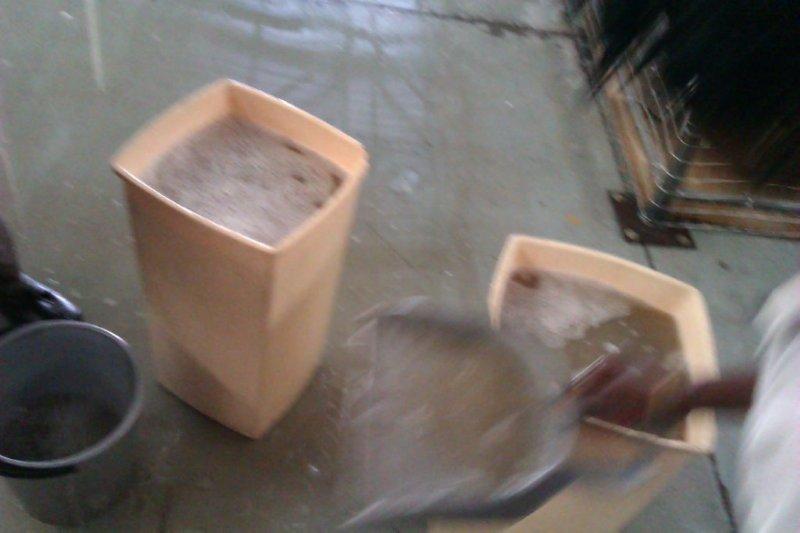
Dustbins full of water being taken out.

ENJOY

We know this is how most of the staff feel about the looooong weekend!
Have fun and be safe wherever you might be travelling to.


Video Below (Some sites might not be able to access it due to Security Settings)


COMPANY INFO

Latest company details please look on www.nicinternal.co.za

Product Realization – Select or Click on Company Profile
Company Profile contains the following:
·         Bank Account Details
·         BEE Letter
·         CM 29
·         Company letterhead (ADM)
·         Letter of Goodstanding
·         Company Profile
·         SARS / TAX Clearance Certificate
·         VAT Certificate

QMS

The QMS has been updated for April 2012 on Head Office Servers and www.nicinternal.co.za - Please ensure that you download all the documents needed.

If there are any other documents that need to be updated / registered please send to claudette@nicinst.co.za

The QMS website has changed a little bit to make it more user friendly - if you have any suggestions please communicate to the QMS Team.

LETTER OF GOODSTANDING

LETTER OF GOODSTANDING to be on all Notice Boards -
Please request a Copy from Ruan Kriek (SHE Manager)

NIC Staff

NIC's Blog Post on NIC Staff - This will be a chance to see the faces of the people that work for NIC in various departments and branches.

Instruments Stores - Head Office (Unit 2)
From Left to Right:
Chris Chingwalungwalu, Jacob Tshefu, Sam Dlamini, Sibusiso Xaba and Dennis Banda

IMPALA – SAFETY FLASH

NIC would like to inform staff of Safety Flash reports / Recall / Incidents and Near Misses.
This way all sites can learn from the occurances in various sites and how they are dealt with.

Please see below SAFETY FLASH REPORT from Impala.

IMPALA – SAFETY FLASH

Incident - RWC
Name - RB Nku
Department - Central Concentrator
Section - MF2
Location - 19 linear screen  
Date - 11 March 2012
Time - 14h25

Description
While installing a drip tray at 19 linear screens the two riggers was assisting to push the linear drip tray from the bottom floor in order to install it underneath the linear screen. The now injured and a co-worker was pulling it with a rope in position. The drip tray got stuck against the linear screen cloth and the now injured decided to cut the cloth using a Stanley knife. The counter weight roller that was holding the cloth dislodges and falls down and trapped his left forearm between the drip tray and the counterweight roller. This resulted in a serious cut to his left forearm

Findings
The job was never done before by Impala employee
This was the first time the boilermakers took on a job like this.
The task was done on a Sunday on overtime
There was no procedure or Pre emptive risk assessment done before the artisans start work.
Only a mini risk assessment was conducted and only the basic risks were addressed.
The foreman did not supervise them, busy with paper work in his office.
This is the second serious accident that occur in this section on overtime

Photos

Recommendations
A procedure will be drawn up for this task specifically
The artisans will be trained on the procedure.
Section 23 of the Mine Health and Safety Act will be reemphasized as well as section 10 1 a & b